Highlights of the 2026 Consensus American Pulmonary Embolism Guidelines

by Anand Senthi


This year saw the release for the first time of the Clinical Practice Guidelines for the Evaluation and Management of Acute Pulmonary Embolism (PE).

Lead by American College of Cardiology (ACC) and the American Heart Association (AHA) the guidelines also represent a collaboration and endorsement from the following groups:  American College of Clinical Pharmacology, American College of Emergency Physicians, American College of Chest Physicians, Society for Cardiovascular Angiography & Interventions, Society of Hospital Medicine, Society of Interventional Radiology, Society for Vascular Medicine, and the Society of Vascular Nursing. 

Prior to this guideline, there was no authoritative American guideline with the European Society of Cardiology (ESC) Guidelines being the defacto guideline used internationally, the last released in 2019.

The new joint American guidelines provide numerous updates. Major highlights and developments are to the:

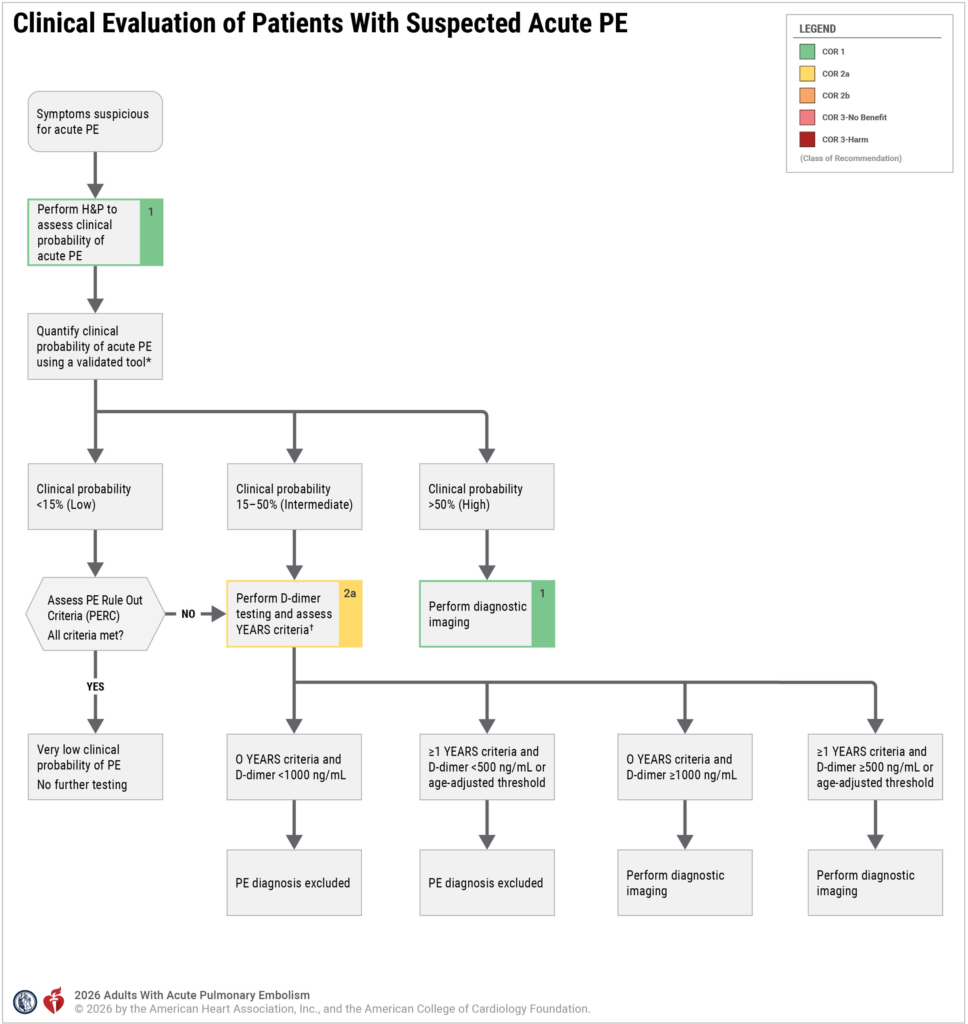
The Diagnostic Pathway

The guideline endorses contemporary, evidence-based, Emergency Medicine diagnostic practice of the sequential use of the PERC Rule, YEARS adjusted d-dimer and Age-adjusted d-dimer to avoid imaging.

Numerous studies have now validated the various parts of the pathway and the whole pathway has also been studied demonstrating the safe avoidance of imaging by using these strategies in sequence. Now with the endorsement of this major guideline, this should become standard practice.

Prognostic Risk Stratification

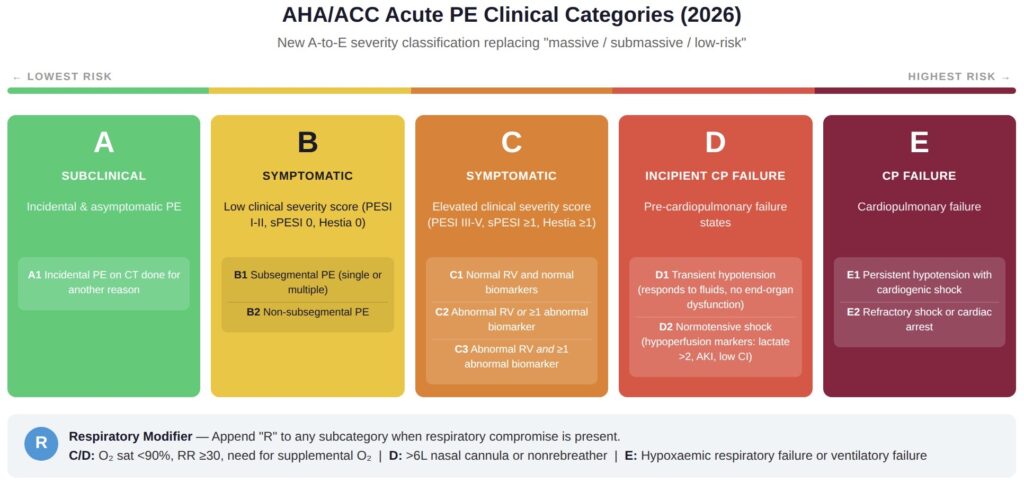
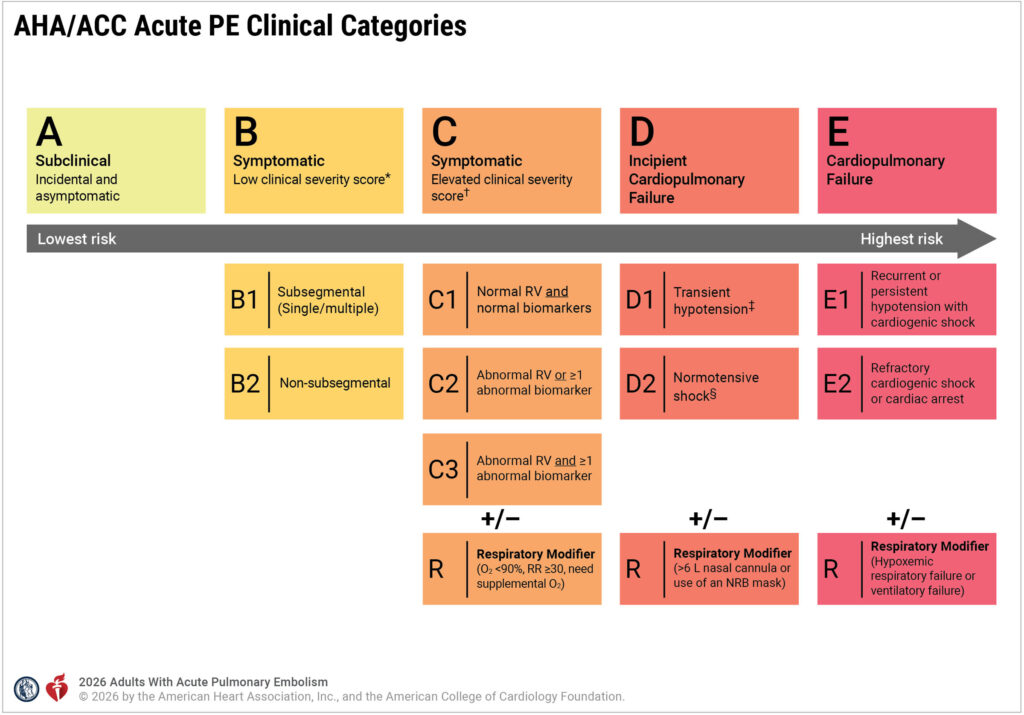
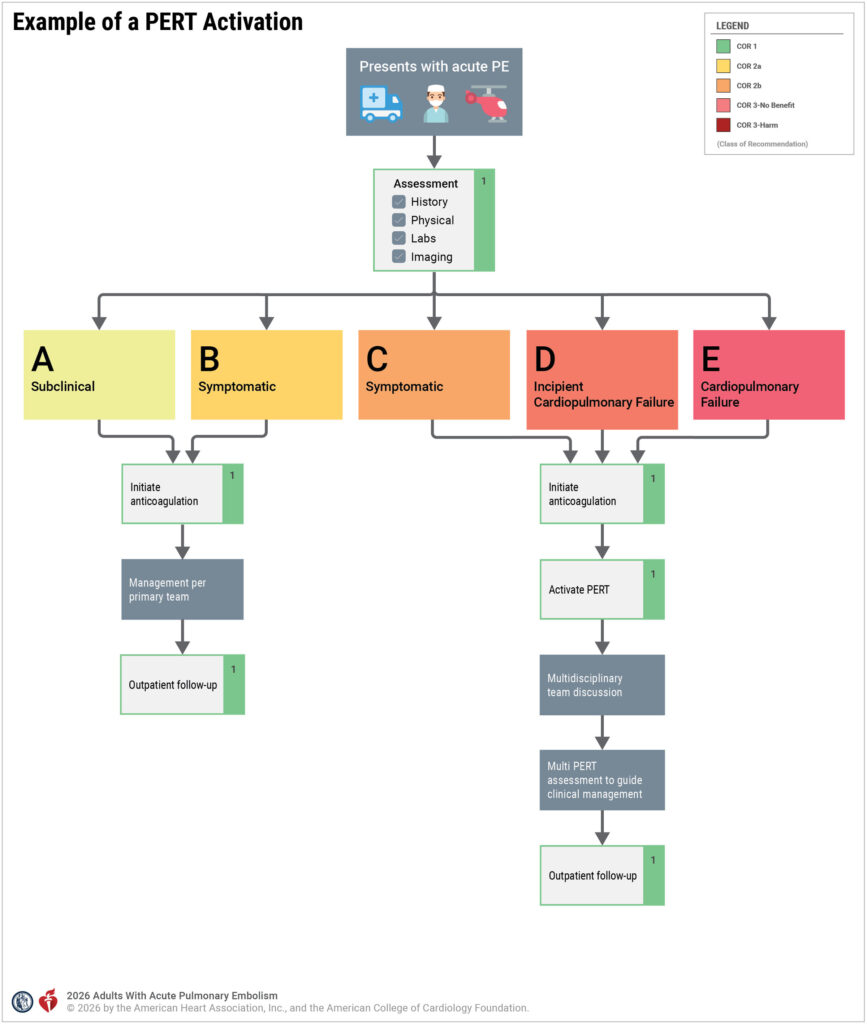
The guidelines has changed the classification of diagnosed PE by prognostic risk category. The low risk, intermediate risk (previously sub-massive), high risk (previously massive) PE categories have been replaced by a grading system from A to E, with A the lowest risk and E the highest risk of mortality.

  • Category A:
    • Subclinical – Incidental and asymptomatic PE, usually found on imaging for another indication.
  • Category B:
    • Symptomatic but low clinical severity score (sPESI = 0, PESI = I-II, Hestia = 0).
  • Category C:
    • Symptomatic with elevated severity score (sPESI ≥1, PESI III-V, Hestia ≥1).
    • Additional subcategories C1-C3 separate by level of myocardial impact based on right ventricular strain  (on CT/Echo) and elevated cardiac biomarkers.
      • C1 – Normal RV and biomarkers
      • C2 – Abnormal RV or ≥1 abnormal biomarker
      • C3 – Abnormal RV and ≥ 1 abnormal biomarker
  • Category D: Incipient cardiopulmonary failure.
    • Transient hypotension (fluid responsive, no end-organ damage) or
    • Normotensive shock (“pre shock”) with hypoperfusion makers: lactate >2, AKI or low CI).
  • Category E: Cardiopulmonary failure.
    • E1 – persistent hypotension with cardiogenic shock.
    • E2 – represents refractory shock or cardiac arrest.

Both category A and B are very low risk and are generally recommended for early discharge home on treatment as required, usually avoiding admission.

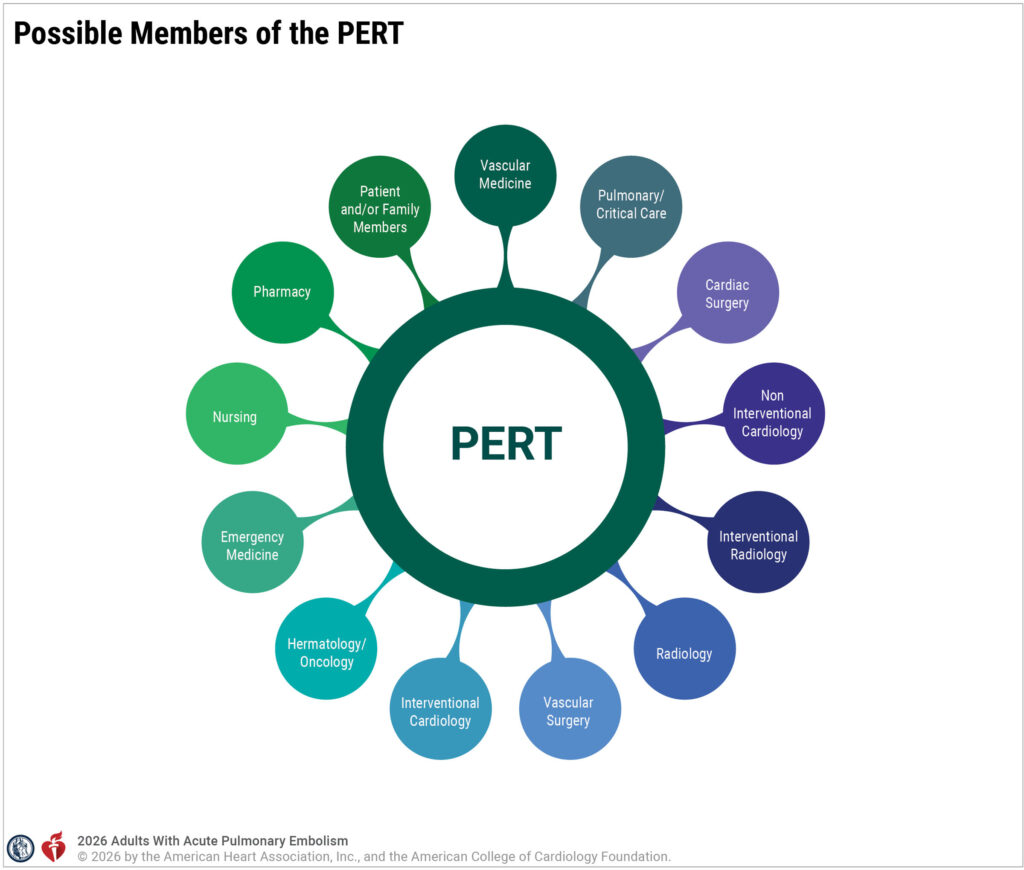
Categories C-E require admission, increasing levels of close observation and consultation with a PERT team (Pulmonary Embolism Response Team), if available, to determine if what advanced therapies shoulder be considered in addition to standard anticoagulation therapy.

Each category also has a Respiratory modifier “R” appended when respiratory compromise is present, with the way compromise is defined escalating with higher categories.

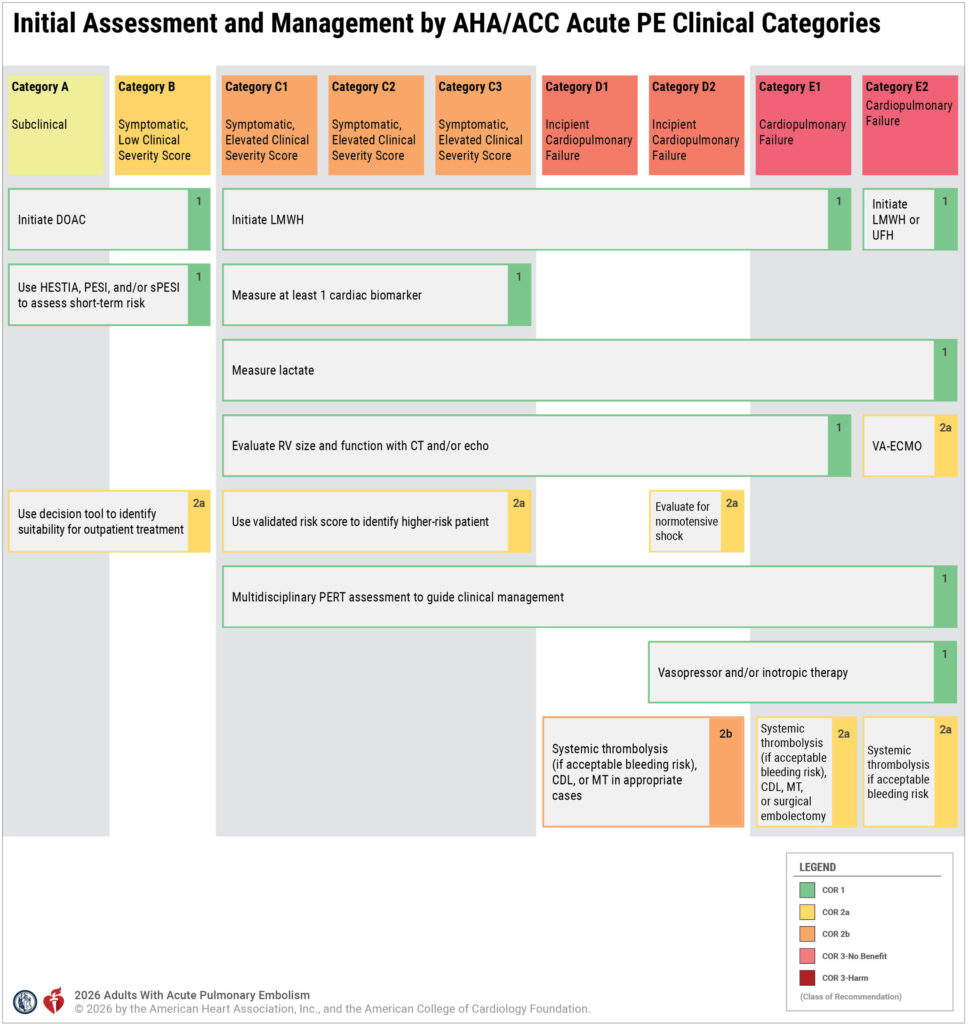
Initial Assessment & Management

This is summarised in this table

Anticoagulation

Numerous recommendations are made regarding anticoagulation which are best explained directly in the anticoagulation section of the guideline itself. In general:

  • LMWH (low molecular weight heparin) was preferred over UFH (unfractionated heparin) (with few exceptions)
  • DOACs were preferred over Warfarin with a few exceptions including (but not limited to) Child Pugh C liver disease, breastfeeding, and anti-phospholipid syndrome.
  • DOACs were generally preferred over LMWH for with a few exceptions including (but not limited to) pregnancy, breastfeeding and the first dose initiation of therapy in categories C-E.

PERT Team Consultation

In patients with acute PE who are at increased risk of adverse outcomes (Categories C-E) a multidisciplinary PERT (PE Response Team) assessment is recommended to improve in-hospital care delivery. The rationale for this guidance is stated as: “overall, PERTs improve clinical outcomes in several areas, but their effect on mortality is not yet conclusively established.”

Patient Transfer

  • “Patients with Acute PE who exhibit high risk features but are haemodynamically stable [category C3-D], transferring to a centre that can provide advanced therapies may be considered to ensure access to appropriate interventions.”
  • “Unstable patients with acute PE [category E] should not be transferred to another medical centre before stabilizing their condition”

Systemic Thrombolysis

The systemic thrombolysis recommedations, can be summarised as follows.

In patients with “acceptable bleeding risk” in whom advanced therapies are being considered, the use of systemic thrombolysis in addition to anticoagulation:

  • Categories
    • E1-E2 – “is reasonable”
    • D1-D2 – “may be considered”
    • C3 – “is uncertain”
    • In A-C2 – “should not be used”

Lower dose: “In patients with acute PE being treated with systemic thrombolysis, lower-dose systemic-thrombolytics may be considered to reduce the risk of bleeding.”

Leave a Reply

Your email address will not be published. Required fields are marked *

Fill out this field
Fill out this field
Please enter a valid email address.
You need to agree with the terms to proceed

This site uses Akismet to reduce spam. Learn how your comment data is processed.